Rubber & Flat Roofing
Rubber Roofing in Syracuse, NY
EPDM Roofing
What EPDM Roofing Is
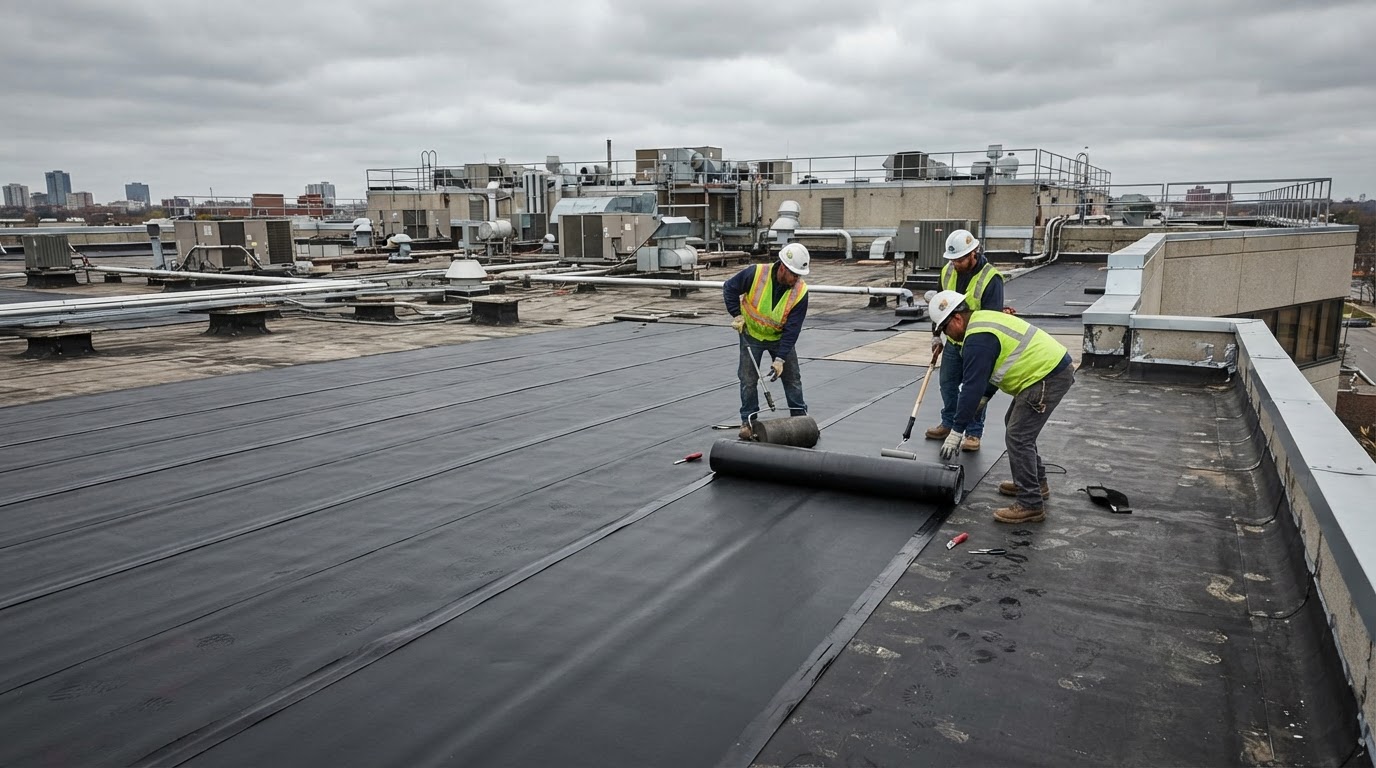
EPDM is a synthetic rubber membrane used on low-slope and flat commercial roofs. It comes in wide rolls, is installed in large sheets to minimize seams, and is secured by full adhesion, mechanical attachment, or ballast. EPDM has been used on commercial buildings for decades and remains one of the most common flat roof systems in Central New York.
Its flexibility and weathering resistance make it a practical choice for the temperature swings, snow, and freeze/thaw cycles that Syracuse buildings face. But "rubber roof" is a general term — the specifics of the assembly, insulation, and detailing determine how the roof actually performs.
Why EPDM
Why EPDM Is Common on Commercial Buildings
EPDM is widely used on commercial and industrial buildings because it covers large roof areas efficiently, handles foot traffic and rooftop equipment access reasonably well, and offers a long service life when properly installed and maintained. The relatively few seams on a fully adhered system mean fewer potential leak paths compared to multi-ply alternatives.
Installation
EPDM Installation
A proper EPDM installation starts with the substrate and insulation. We evaluate the deck, specify appropriate insulation, and install the membrane with attention to seams, flashings, and penetrations — the detail areas where most flat roofs eventually fail. Drainage is designed in, not added as an afterthought, so water moves off the roof instead of ponding.
Replacement
EPDM Replacement
When an EPDM roof reaches the end of its service life — widespread seam failure, shrinkage, or saturated insulation — replacement protects the building and its contents. We assess whether a full tear-off or a recover is appropriate, inspect the deck and insulation, and specify a new system matched to the building.
Repairs
EPDM Repairs
Many EPDM roofs can be repaired for years before replacement is needed. We patch punctures and tears, re-bond parted seams, replace failed pipe boots and flashings, and address the drainage conditions that caused the damage. For repair specifics, see our commercial roof repair page.
Detailing
Seams, Flashing & Penetrations
On an EPDM roof, seams, flashings, and penetrations are where leaks start. Seam tape and adhesives age; flashings pull away from curbs and walls as the membrane shrinks; pipe boots dry and crack. We give these detail areas focused attention on every repair and installation.
Assembly
Insulation & Drainage
The membrane is only the top layer. Insulation affects energy performance and condensation control; drainage determines whether water ponds or clears. On replacements and new installations, we specify insulation appropriate to the building and design drainage so water moves to drains and scuppers instead of collecting in low spots.
Problems
Common EPDM Problems
Seam failures
Seam tape and adhesives age and lose adhesion, opening a path for water.
Shrinkage
EPDM can shrink over time, pulling flashings away from edges and curbs.
Punctures & tears
Foot traffic, dropped tools, and hail puncture the membrane.
Flashing failures
Curb and edge flashing that has pulled, cracked, or lost seal.
Penetration seals
Pipe boots and vent seals that have dried, cracked, or shrunk.
Ponding water
Standing water that accelerates aging at low spots and around drains.
Maintenance
EPDM Maintenance
Regular inspections catch seam, flashing, and penetration issues before they leak. Cleaning drains, removing debris, and documenting condition over time extend service life and make capital planning predictable. Our commercial roof maintenance program covers scheduled inspections and documentation for flat roof systems.
Comparison
EPDM vs. TPO & PVC
EPDM, TPO, and PVC are all single-ply membranes, but they differ in material, seam method, and performance characteristics. The right choice depends on the building's use, energy goals, chemical exposure, and budget.
EPDM
Black rubber membrane, proven track record, flexible in cold, fully adhered or mechanically attached. Cost-effective and well suited to Central New York temperature swings.
TPO
White reflective thermoplastic, heat-welded seams. Strong reflectivity and energy performance; seam integrity depends on quality of welding.
PVC
Thermoplastic like TPO with strong chemical resistance, often used where exhaust or chemical exposure is a factor. Heat-welded seams.
Modified bitumen
Multi-ply asphaltic membrane, durable under traffic, common on older flat roofs. Torched or cold-applied with gravel or smooth surfacing.
Local Fit
Suitability for Central New York
EPDM's flexibility in cold weather is a real advantage in Syracuse. It stays workable at low temperatures, which helps it accommodate the expansion and contraction that comes with our seasonal swings. Paired with good drainage and a maintenance program, EPDM is a sensible flat roof system for Central New York commercial buildings.
FAQ
Commercial Roofing Questions
What is EPDM roofing?
Is EPDM a good choice for Syracuse's climate?
What's the difference between EPDM, TPO, and PVC?
Can an EPDM roof be repaired, or does it need replacement?
How long does an EPDM roof last?
Do you also install TPO and PVC, not just EPDM?
Request a Commercial Roof Assessment
Tell us about your building and the roofing concern. We'll inspect the roof, identify the problem, and give you a clear scope and estimate — whether that's a targeted repair, restoration, or full replacement.
For Building Owners & Managers
Property managers, facility managers, and business owners rely on us for clear communication, documented findings, and practical repair-vs-replacement recommendations — not automatic replacement.