Commercial Roof Maintenance
Commercial Roof Maintenance in Syracuse, NY
Inspections
Scheduled Inspections
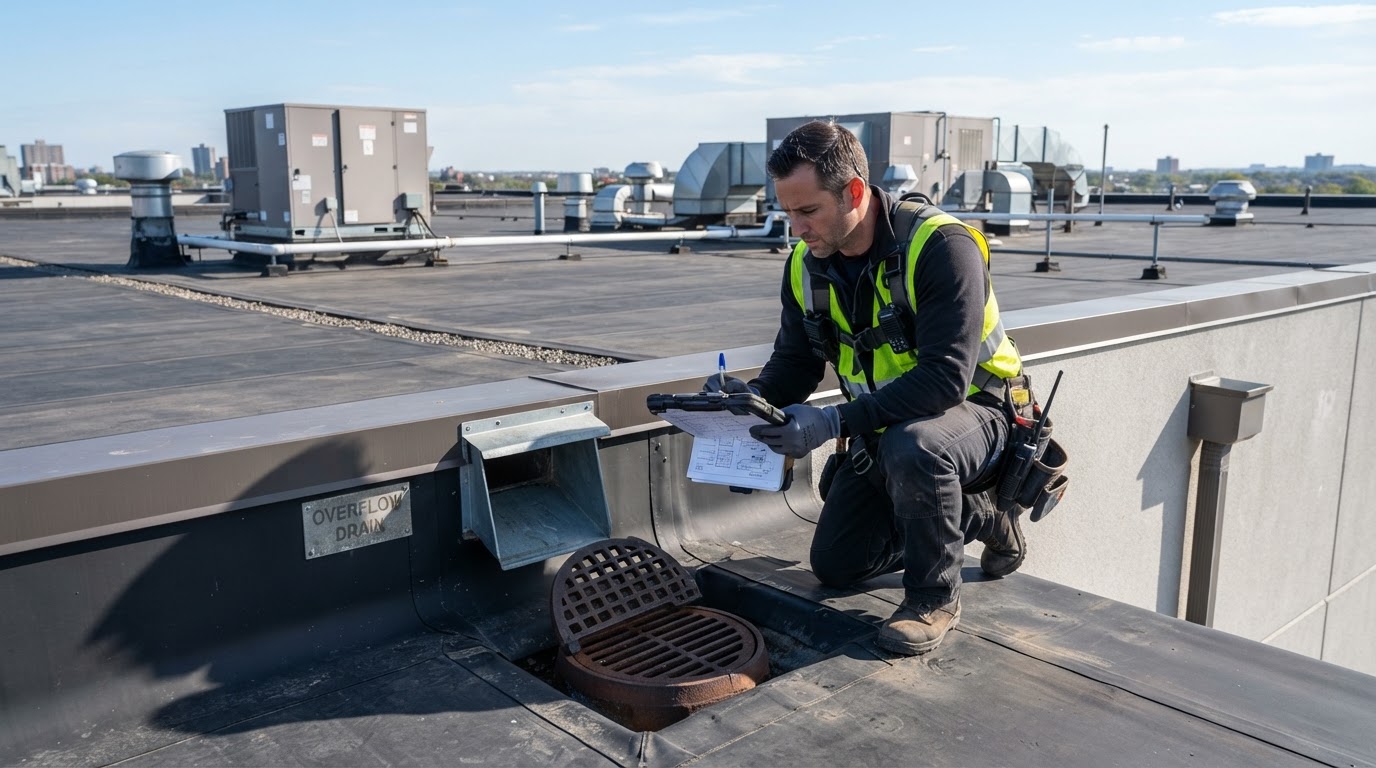
A commercial roof that's inspected regularly lasts longer and leaks less. Scheduled inspections catch developing problems — an open seam, a pulled flashing, a clogged drain — before they let water into the building. We walk the roof, document conditions, and address minor issues during the visit.
Seasonal
Spring & Fall Roof Checks
In Central New York, the weather cycle makes spring and fall the natural inspection times. A spring check catches damage from winter snow, ice, and freeze/thaw. A fall check prepares the roof for the coming winter — clearing drains before snow, addressing flashing before ice, and confirming the roof is ready for the season ahead.
Storm Response
Post-Storm Inspections
After significant wind, hail, or heavy snow, a targeted inspection catches damage early. Wind can lift membrane and flashings; hail can bruise membranes and dent metal; snow adds weight and clogs drainage. A post-storm check turns "I hope the roof is okay" into a documented answer.
Checklist
What a Maintenance Visit Covers
Scheduled inspections
Regular roof walks that catch developing issues before they leak.
Spring & fall checks
Seasonal inspections timed to Central New York's weather cycle — after winter and before it.
Post-storm inspections
Targeted checks after wind, hail, or heavy snow events.
Drain & scupper inspection
Clearing and checking drains, scuppers, and overflow so water moves off the roof.
Debris removal
Removing leaves, branches, and debris that trap moisture and clog drainage.
Flashing inspection
Checking curb, edge, and wall flashing for pulls, cracks, and failed seal.
Seam inspection
Inspecting seams for parting, lifting, and adhesion loss.
Membrane condition
Documenting blisters, splits, punctures, and wear across the roof.
Penetration checks
Inspecting pipe boots, vent seals, and rooftop equipment curbs.
Rooftop equipment areas
Checking around HVAC and equipment where service traffic and leaks are common.
Metal fasteners
On metal roofs, inspecting for backed-out or loose fasteners.
Minor repairs
Addressing small issues during inspection before they become leaks.
Prevention
Leak Prevention
Most commercial roof leaks develop over time — a seam slowly parts, a flashing pulls, a drain slowly clogs. Regular inspection catches those trends early. Addressing a developing issue during a maintenance visit costs a fraction of an emergency leak repair and the interior damage that comes with it.
Documentation
Photo Documentation & Condition Tracking
Every maintenance visit is documented with photos and written condition notes. Over time, that record shows how the roof is aging, where problems recur, and when repair or replacement is likely. That documentation is what turns a roof from a reactive problem into a managed asset.
Planning
Planning Future Capital Expenses
Condition tracking lets you plan. Instead of an emergency replacement that disrupts operations and blows a budget, you can see a roof's trajectory years ahead and plan the capital expense on your timeline. For multi-building portfolios, that planning is invaluable.
Service Life
Extending Usable Roof Life
A well-maintained roof lasts longer — that's not a slogan, it's mechanics. Membranes that drain properly, seams that are addressed before they part, and flashings that are resealed before they fail all extend the service life you get from the roof you already have. When repair is no longer enough, see our roof coatings page for restoration options and our commercial roof repair page for targeted repairs.
Reliability
Reducing Surprise Emergency Repairs
Emergency repairs cost more, disrupt more, and happen at the worst times. A maintenance program reduces them by catching the conditions that cause emergencies — before the storm, before the freeze, before the drain backs up. For buildings that can't tolerate downtime, that reliability is the point.
For Managers
For Property & Facility Managers
If you're responsible for multiple buildings, roofing is a recurring management challenge — different roofs, different systems, different ages, different problems. A consistent maintenance program across your portfolio gives you uniform documentation, predictable budgeting, and a single point of contact for the condition of every roof.
You get condition records you can show ownership, a maintenance schedule you can plan around, and capital projections that take the surprise out of roofing. That's what turns a portfolio of roofs into a managed asset.
FAQ
Commercial Roofing Questions
How often should a commercial roof be inspected?
What does a commercial roof maintenance program include?
Is roof maintenance worth it for a single building?
Do you offer maintenance for property managers with multiple buildings?
Can maintenance prevent leaks?
Do you document the roof's condition over time?
Request a Commercial Roof Assessment
Tell us about your building and the roofing concern. We'll inspect the roof, identify the problem, and give you a clear scope and estimate — whether that's a targeted repair, restoration, or full replacement.
For Building Owners & Managers
Property managers, facility managers, and business owners rely on us for clear communication, documented findings, and practical repair-vs-replacement recommendations — not automatic replacement.